
Navy Chief Links Economic Growth to Human Capacity and Maritime Security
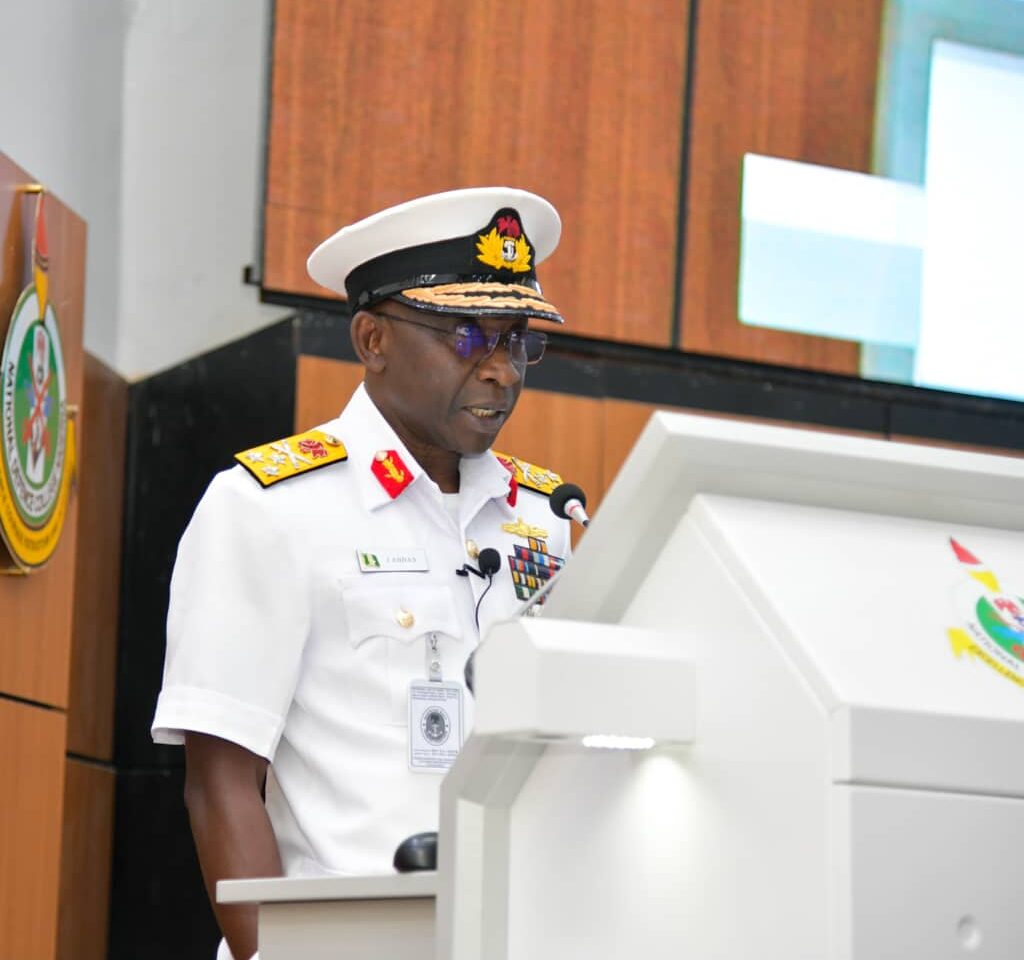
The Chief of the Naval Staff (CNS), Vice Admiral Idi Abbas Admiralty Medal, has identified human capacity development and effective maritime policing as the essential pillars for safeguarding Nigeria’s waters and driving national economic growth.
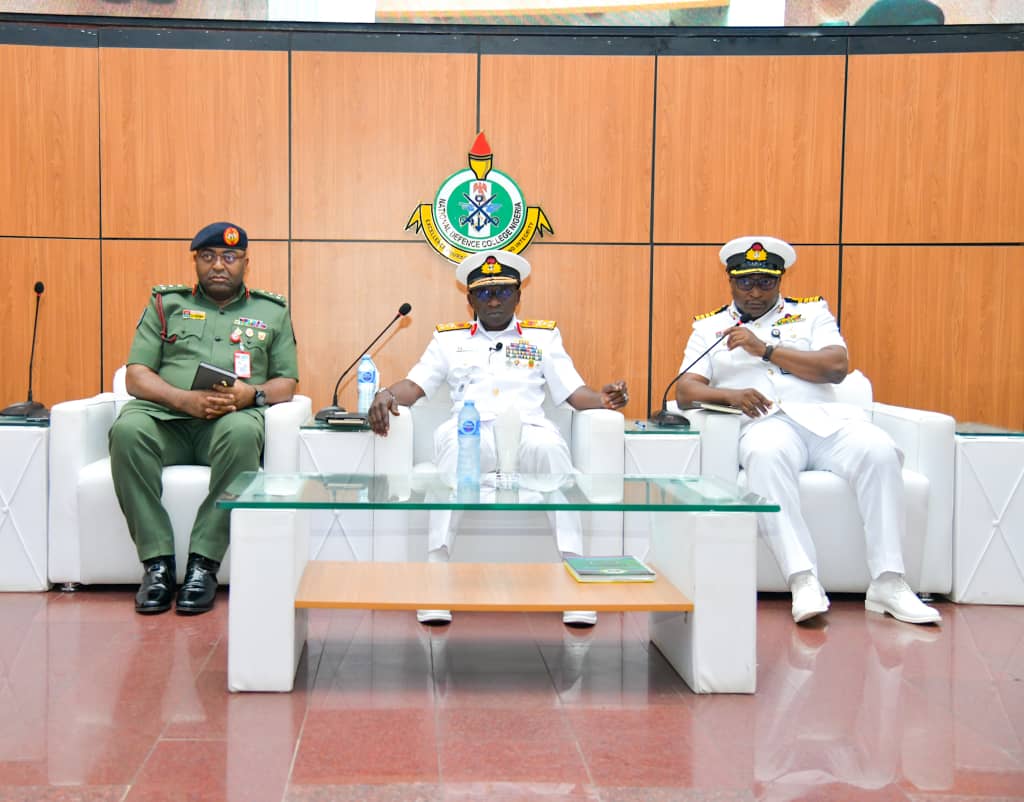
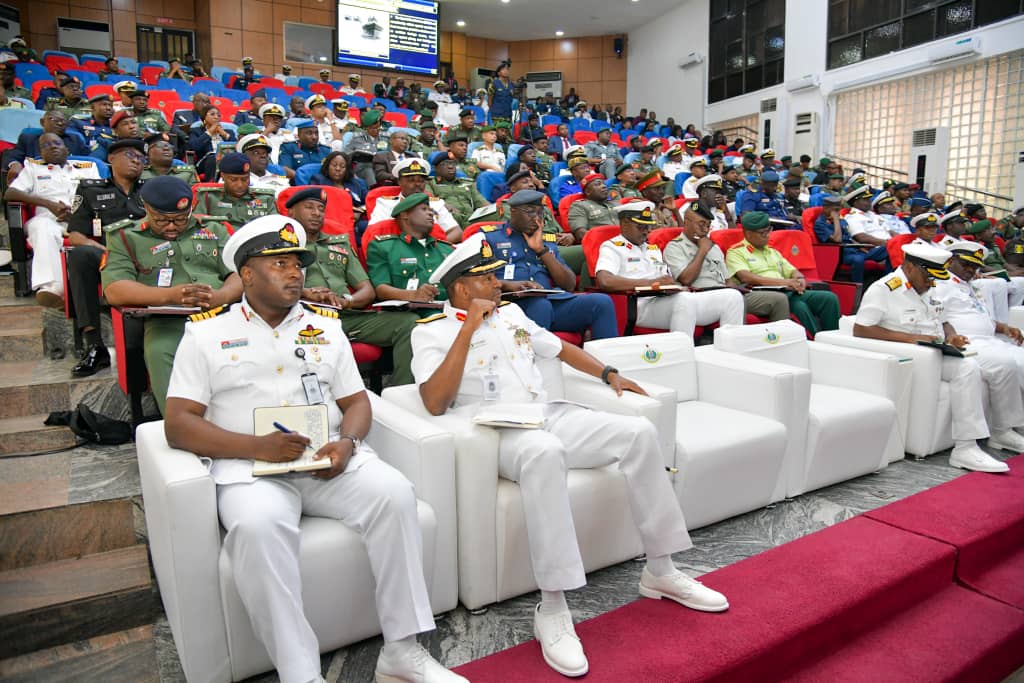
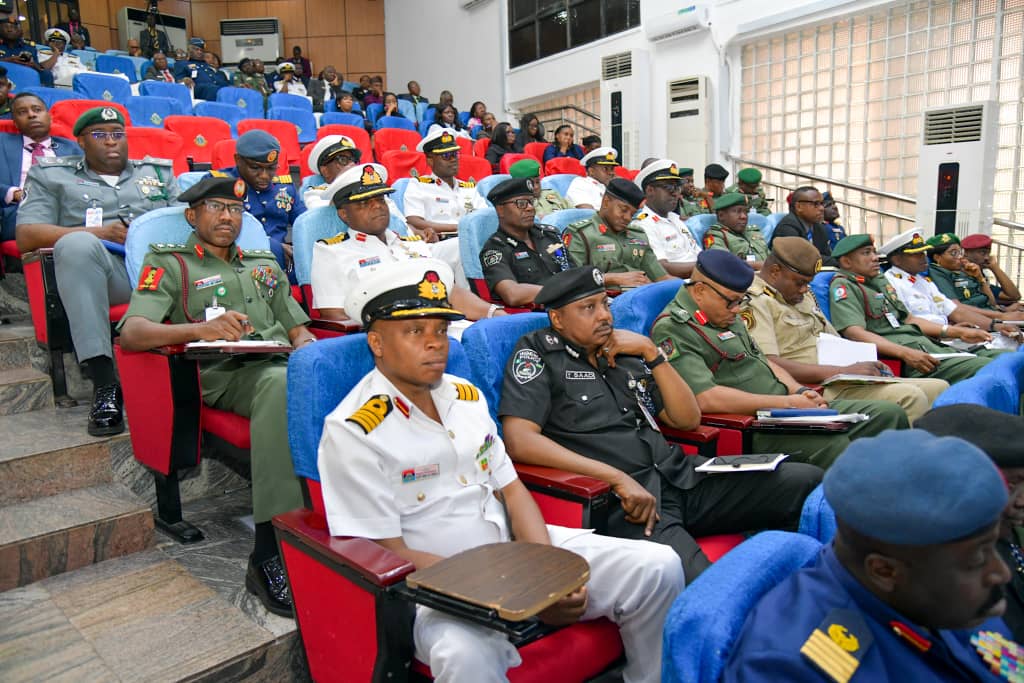
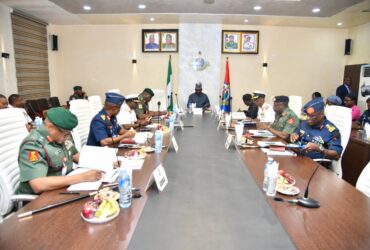
Delivering a lecture titled “Maritime Power and National Security: The Nigerian Navy in Perspective” to participants of Course 34 at the National Defence College (NDC) in Abuja on Wednesday 4 February 2026, Vice Admiral Abbas emphasized that a well-trained workforce is critical to the Navy’s constitutional mandate.
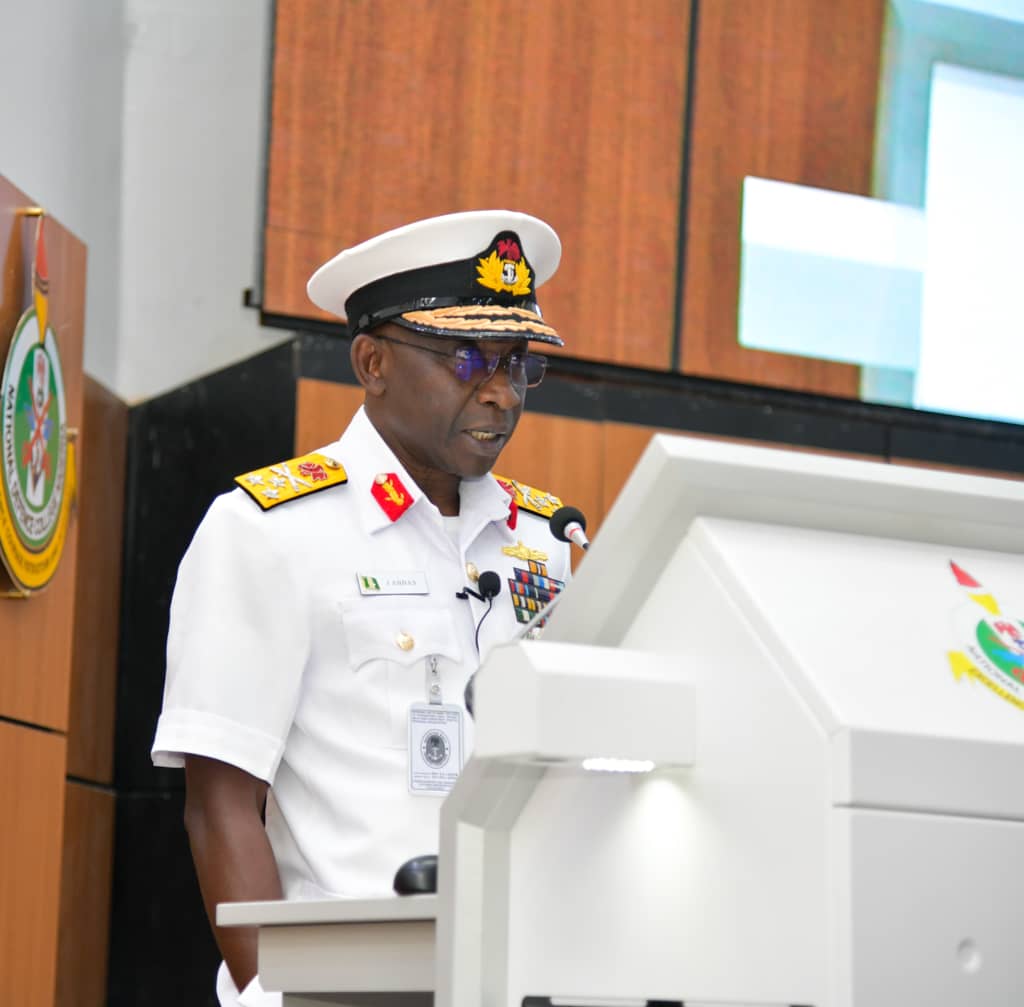
The CNS underscored the strategic importance of Nigeria’s maritime domain, describing it as the “hub of socio-economic development.” He noted that the nation’s maritime environment features approximately 10,000 km of creeks—3,800 km of which are navigable year-round—providing water access to 28 of Nigeria’s 36 states and connecting six neighbouring countries. “Nigeria’s maritime environment is one of the most fertile hydrocarbon regions in the world,” the CNS stated, noting that the sector contributes 8% to the national GDP and accounts for 77% of total exports. He further highlighted that fully harnessed water transportation, alongside tourism, agriculture, and power generation, could generate massive annual revenue for the federation.
Despite this potential, Vice Admiral Abbas lamented that the sector faces a “complex web of threats” rooted in socio-economic challenges, which includes the following:
- Unemployment and poverty.
- Proliferation of small arms and light weapons.
- Piracy and sea robbery.
- Crude oil theft and pipeline vandalism.
To counter these, the CNS detailed the Navy’s Total Spectrum Maritime Strategy, a multi-layered approach that projects power from inland backwaters to the Exclusive Economic Zone (EEZ) and beyond.
Technological Edge and Enforcement
The Nigerian Navy (NN) has modernized its surveillance through the Regional Maritime Awareness Capability (RMAC) and the FALCON EYE alignment systems. These technologies allow for real-time monitoring and have successfully intercepted several vessels attempting to load crude oil and LNG without authorization. “The NN has also acquired several capital ships and air assets, including indigenous special duty boats, which have significantly bolstered our response capabilities,” Vice Admiral Abbas added. He also called for a more robust law enforcement strategy to ensure the effective prosecution of maritime offenders.
The CNS expressed gratitude to President Bola Ahmed Tinubu for providing the strategic guidance necessary for the Navy to fulfil its roles.
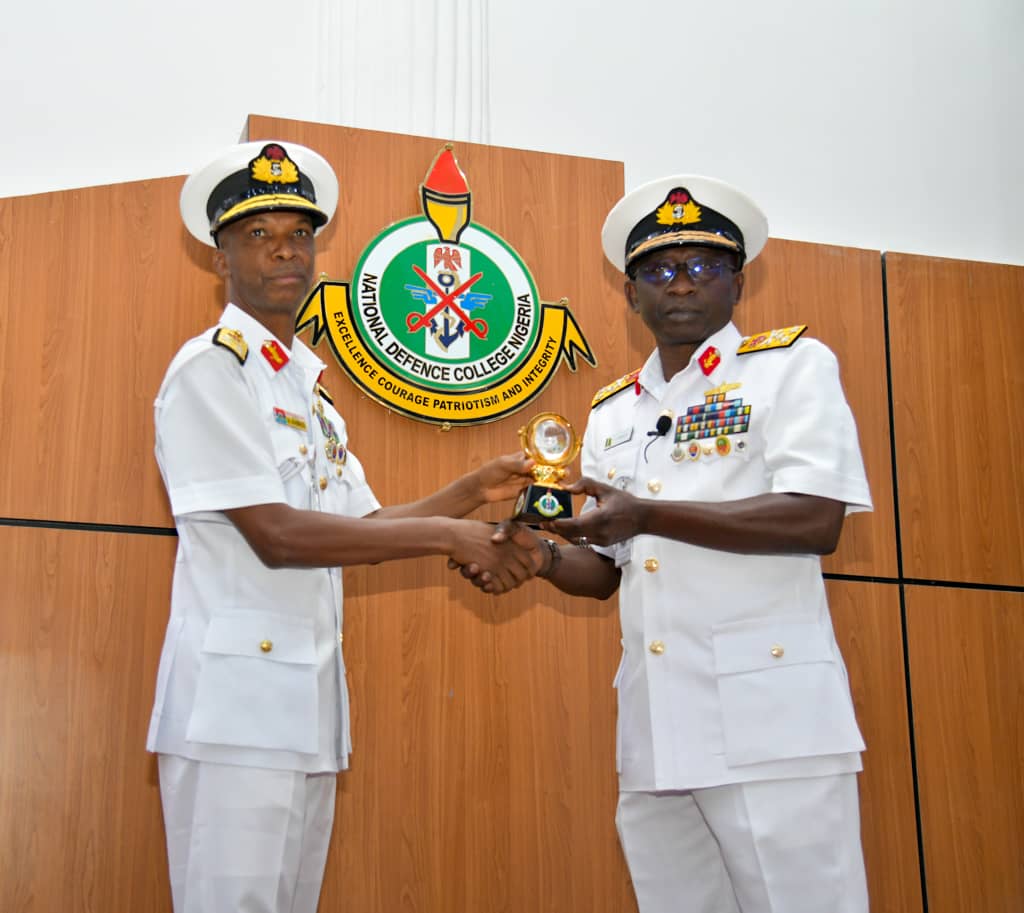
In his remarks, the Commandant of the NDC, Rear Admiral Abdullahi Ahmed, praised the CNS for his “people-centric” leadership. He noted that Vice Admiral Abbas’s strategic approach has not only driven criminals out of Nigeria’s maritime space but has ensured they remain out, creating a safer environment for legitimate commerce.
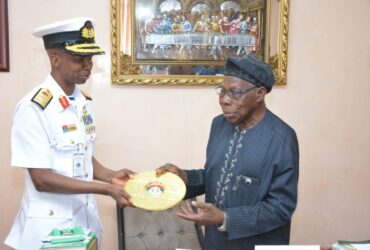
The event concluded with an interactive session between the CNS and Course 34 participants, followed by the signing of the visitors’ book.