
Strategic Leadership in Focus – Theatre Commander Operation Hadin Kai Lectures NDC Course 34 on National Security
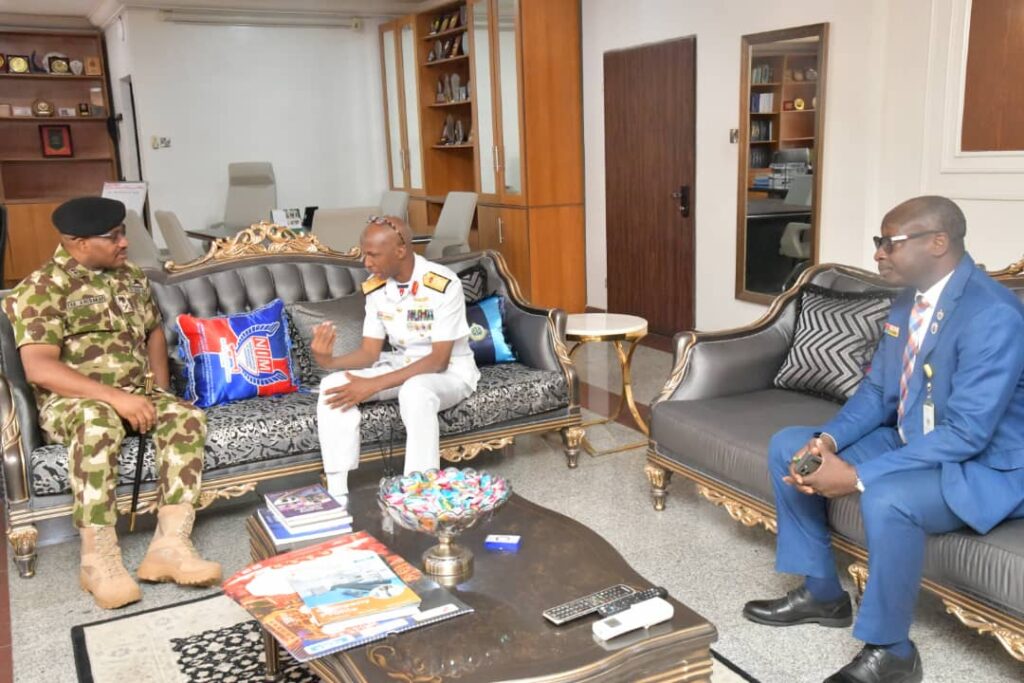
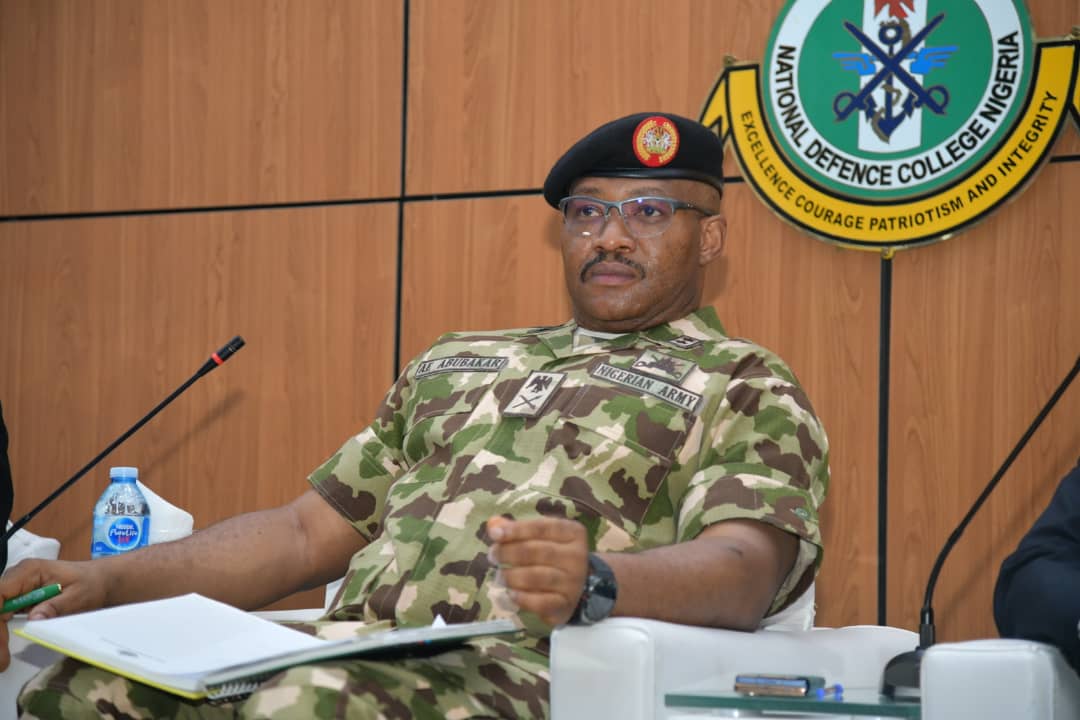
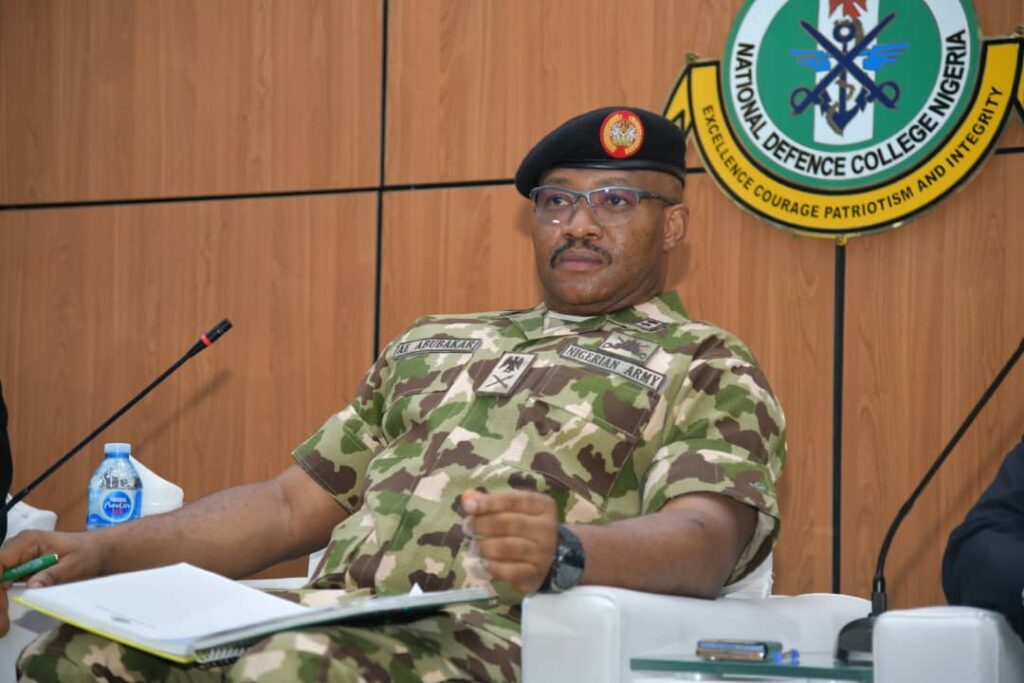
In a high-level strategic engagement, the Theatre Commander of Operation HADIN KAI (OPHK), Major General AE Abubakar, recently addressed participants of Course 34 at the National Defence College (NDC) Nigeria.
Delivering a lecture titled “Theatre Command in Perspective,” the Commander provided a masterclass on the complexities of counter-insurgency (COIN) and the broader imperatives of national security within the Nigerian context.
The Asymmetric Challenge
General Abubakar’s presentation delved into the evolving dynamics of the insurgency in Northeast Nigeria. He characterized the conflict as a sophisticated form of asymmetric warfare that defies traditional military solutions alone. To achieve lasting results, the Commander argued that operations must balance two distinct lines of effort:
Kinetic Approaches: Precision, intelligence-driven combat missions to neutralize immediate threats.
Non-Kinetic Approaches – Civil-military cooperation (CIMIC), de-radicalization, and psychological operations aimed at winning hearts and minds.
Operational Architecture and Synergy
A significant portion of the lecture was dedicated to the structural management of a “multidimensional conflict environment.” General Abubakar provided an insider’s view of the OPHK command structure, outlining:
Logistics Coordination: The backbone of sustained operations in rugged terrain.
Inter-Agency Synergy: The vital necessity of seamless intelligence sharing and collaboration between the military, paramilitary, and intelligence services.
Adaptive Leadership: The requirement for commanders to remain flexible in the face of fluid enemy tactics.
“Effective theatre command demands decisive leadership and the ability to integrate military efforts with political and social measures to address the root causes of insecurity,” General Abubakar stated.
Beyond the Battlefield
The General underscored that battlefield victories are merely a precursor to permanent peace. He emphasized that National Security is inextricably linked to post-conflict reconstruction, community engagement, and social-economic stabilization. He called for a holistic “whole-of-government” approach to ensure that liberated areas do not backslide into instability.
Strategic Interaction
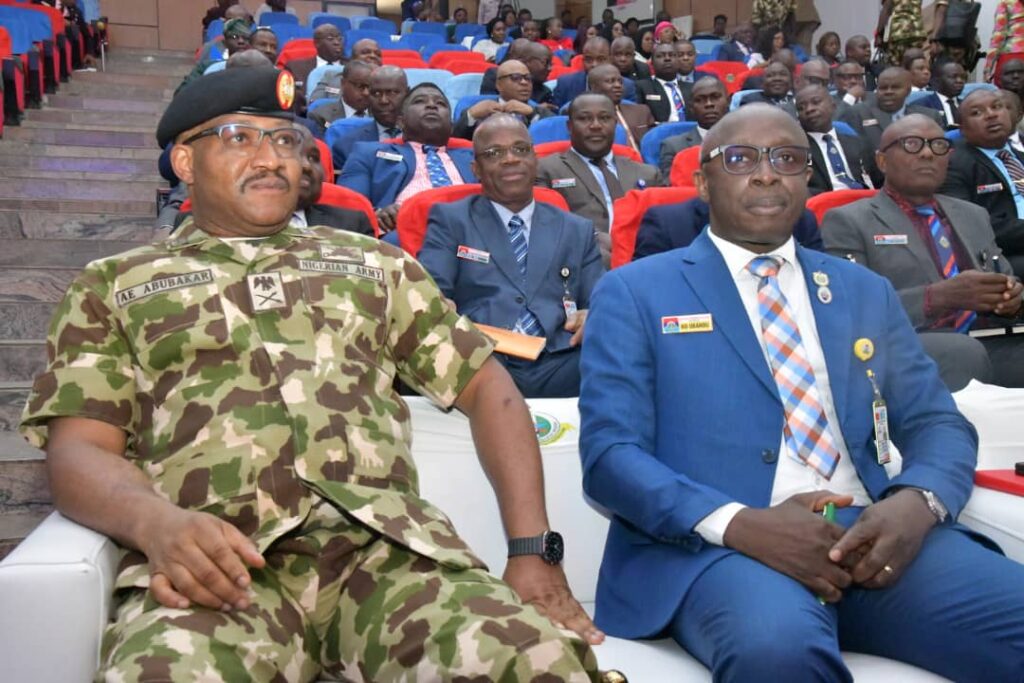
The lecture transitioned into a robust interactive session where NDC participants -senior officers being groomed for higher strategic responsibility – questioned the Commander on:
- Maintaining troop morale during prolonged deployments.
- The sustainability of long-term stabilization strategies.
- Enhanced mechanisms for real-time intelligence sharing.
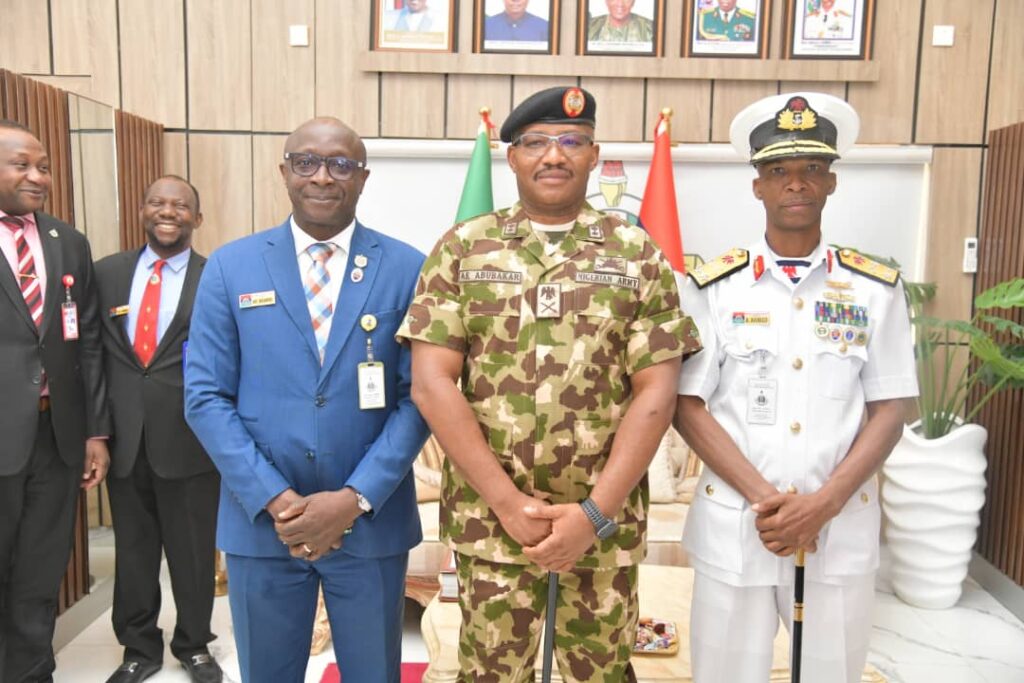
The Commandant of the NDC, Rear Admiral Abdullahi Ahmed, lauded Major General Abubakar for his “incisive and practical” perspective. He noted that bringing real-time operational experience into the classroom is essential for preparing the next generation of strategic leaders.
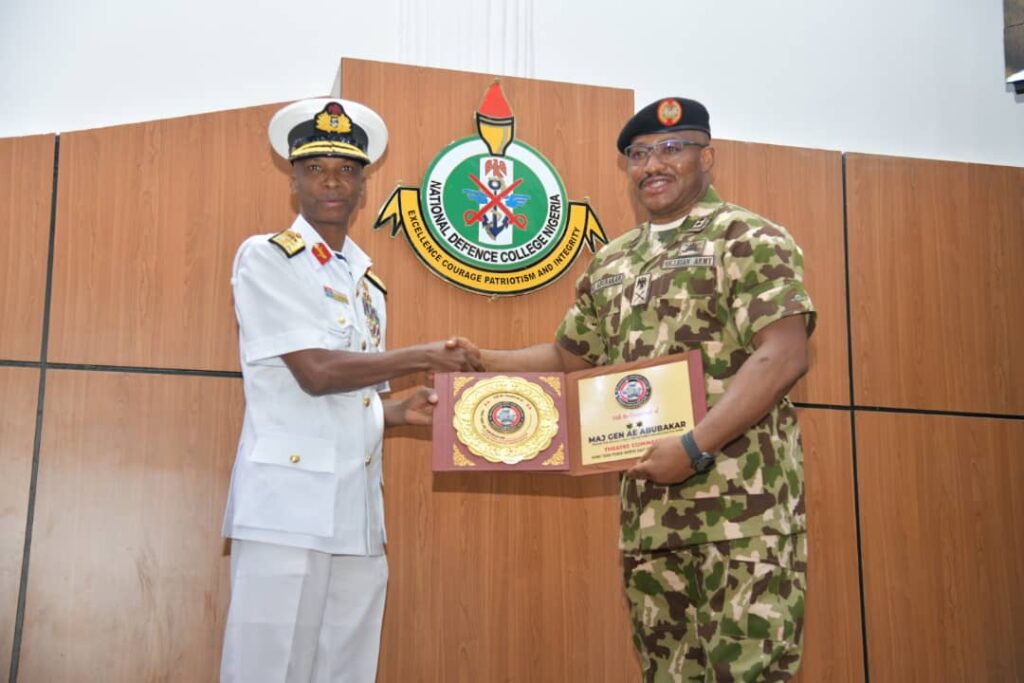
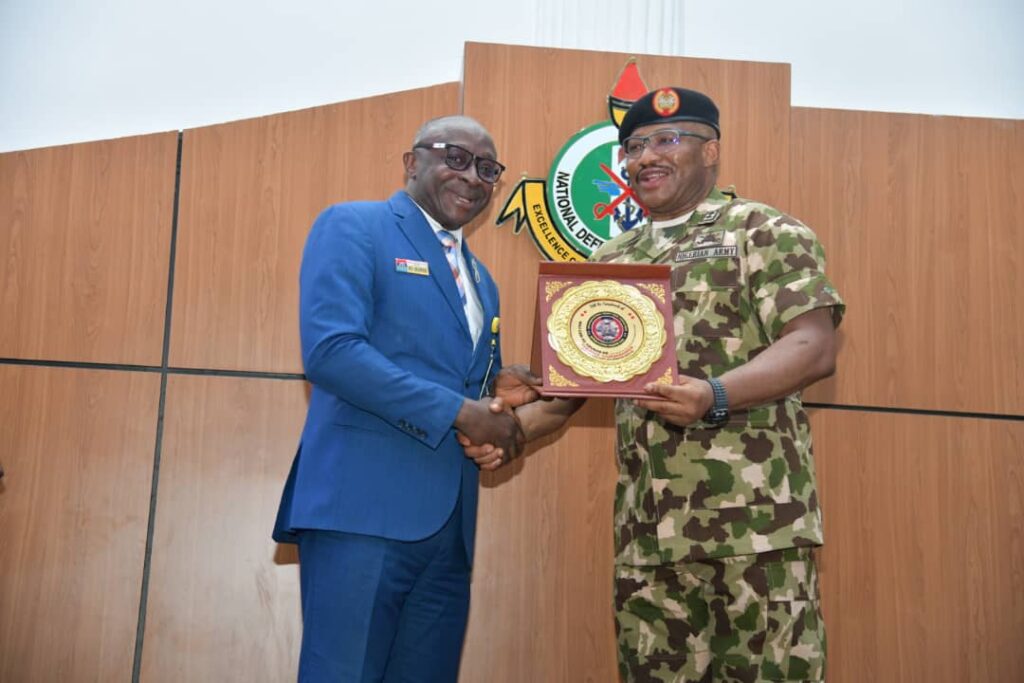
The session concluded with the presentation of a commemorative memento to General Abubakar, marking his contribution to the College’s academic and professional development curriculum.